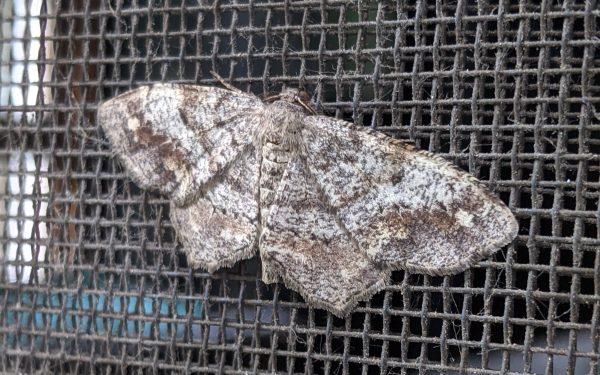
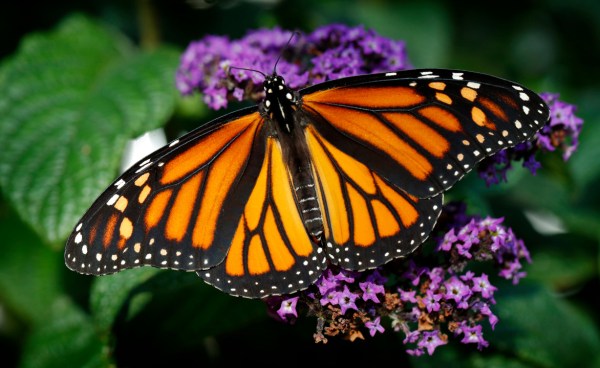
The One-Spotted Variant Moth (Hypagyrtis unipunctata) is a fairly common type of moth in the eastern United States. Butterflies and moths are very similar in many ways and sometimes be difficult to know what you are looking at. There are, however, a few things to look for when you are trying to identify one of these insects. Below is a list of some of the frequently identified differences between butterflies and moths.
The Blog
6 Poems About Butterflies
Photo by Pixabay on Pexels.com Recently, I took a morning walk in the woods. As I wandered down the wooded path, small white butterflies leapt up from the tall grass and fluttered around my legs. The movement of these butterflies really captured my attention. When one landed on the edge of a fern, I stopped... Continue Reading →
The Silver-bordered Fritillary
This little butterfly is known as the Silver-bordered Fritillary (Boloria selene) in North America. It is also known as the Small Pearl-Bordered Fritillary in Europe. This butterfly is usually found in open woodlands or damp grasslands, and can be identified by its orange and brown pattern on the upper side of the wing and a row... Continue Reading →
A Virtual Nature Community?
NaturalistWeekly.com seeks to build a community around nature connection. Recognizing that each of us may have a different approach to connecting with nature, we want to explore and support the diverse ways that people engage with the natural world. Some people may connect with nature through the work of poets like Jacqueline Suskin. I walk... Continue Reading →
Ground Elder AKA Goutweed
Ground Elder (Aegopodium podagraria) also known as Bishop's Weed, Goutweed, and Herb Gerard. The name Ground Elder came to be because the leaves look similar to the Elder, although not identical. It is a member of the larger group of plants known as Apiaceaes.
The European Columbine
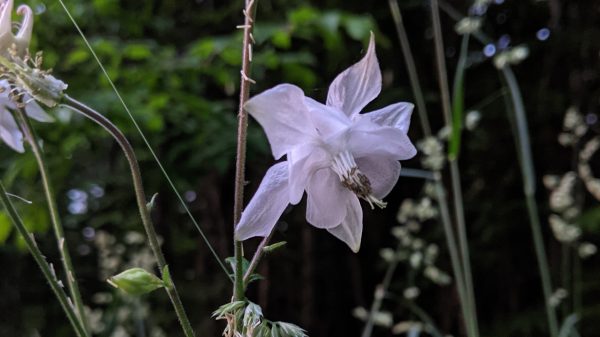
The European, or Garden, Columbine (Aquilegia vulgaris) is a perennial plant with blue, purple, or white flowers. Each flower is about as long as it is wide. This plant, which is a member of the Buttercup family, will grow up to 3 feet tall.(1) The European Columbine has spread widely across North Americas and is... Continue Reading →
Thorns on a Swamp Rose
Over the brambles The Swamp Rose lures me closer Fingers hooked by thorns A Haiku by Mark The Swamp Rose (Rosa palustris) is a perennial shrub that can grow up to 7 feet tall and is native to the eastern United States. As the name suggests, this plant prefers moist, acidic soil. The Swamp Rose... Continue Reading →
Special Event – On Extended Wings: American Birds and American Writing
Have you ever wondered what role birds have played in American literature? Well it turns out, quite a lot. That is why the Library of America, a nonprofit organization focused on preserving and promoting, publishing, and providing readers with opportunities to engage in American writing, is hosting an online conversation with Olivia Gentile, poet Sidney... Continue Reading →
Folklore of Butterflies
Have you ever sat down and watched a butterfly in flight? It is a truly magical experience. A butterfly will flap its wings and glide through the air until it finds something to land on. Slowly, it moves its wings back and forth until it is ready to take flight again. Once back in the... Continue Reading →
Prairie Chickens, the Ocean, and You
As we launch into this next week, I wanted to recap some of the news stories and events I came across last week. This is just a small sampling of all the work that is going on out there to help the earth and support our connection to nature. Each one of these stories is... Continue Reading →
Hummingbirds as Pollinators
Hummingbird at our feeder - June 09, 2021 My research this week have been focused on pollinators species and pollinator gardens. Hummingbirds, as it turns out, are also a vital part of the pollinator population. There are approximately 328 different species(1) of these amazing little birds, which are a part of the larger order of... Continue Reading →
Eastern Tiger Swallowtail in haiku
Earlier this week I posted about Honeysuckles and the importance of pollinator gardens. In that post, I wrote a haiku that mentioned the Monarch butterfly (Danaus plexippus). Well, as it turns out the Monarch butterfly might have been a perfect fit for my haiku, but it wasn't what I was seeing. I was actually watching... Continue Reading →