April 29 to May 05 is the 18th week of 2024. This week, we are in the Solar Term of Grain Rain (Apr 20 -May 04), and the micro-season of “Peonies Bloom” (Apr 30 – May 04).
Basho, Issa, Buson, and Reichhold wrote the poems for this week.
The 24 Solar Terms
The 24 solar terms were created by farmers in ancient China (206 BCE and 24 CE) to help guide their agricultural activities. Each solar term is 15 days long and is based on the climate around Xi’an, the capital of China during the Han Dynasty (206 BCE to 220 CE). (1)
Grain Rain
Grain Rain is the sixth Solar Term of the year and the sixth Solar Term of Spring. Guyu (谷雨) is the Chinese name for this season. “Guyu means “Grain crops grow fast because of rain”’.(2)
Seasonal Food: Toona sinensis
Toona sinensis, also known as Chinese mahogany, Chinese toon, or red toon, is a deciduous tree native to eastern and southeast Asia. In early spring, the young leaves of toona sinensis are harvested and used as a vegetable in many Chinese dishes. These leaves have “a floral, yet onion-like flavor”, are high in vitamin E, iron, and calcium, and are said to be good for strengthening the immune system and beneficial for the stomach and skin.(4)
“Toona sinensis before the rain is as tender as silk”, is an old Chinese saying that reminds us of the proper time to harvest this vegetable.(3)
The 72 Seasons
The 72-season calendar was established in 1685 by Japanese astronomer Shibukawa Shunkai. Each season lasts for about 5 days and offers “a poetic journey through the Japanese year in which the land awakens and blooms with life and activity before returning to slumber.”(4)
The micro-season for this week is “Peonies Bloom” (Apr 30 – May 04).
The Peony
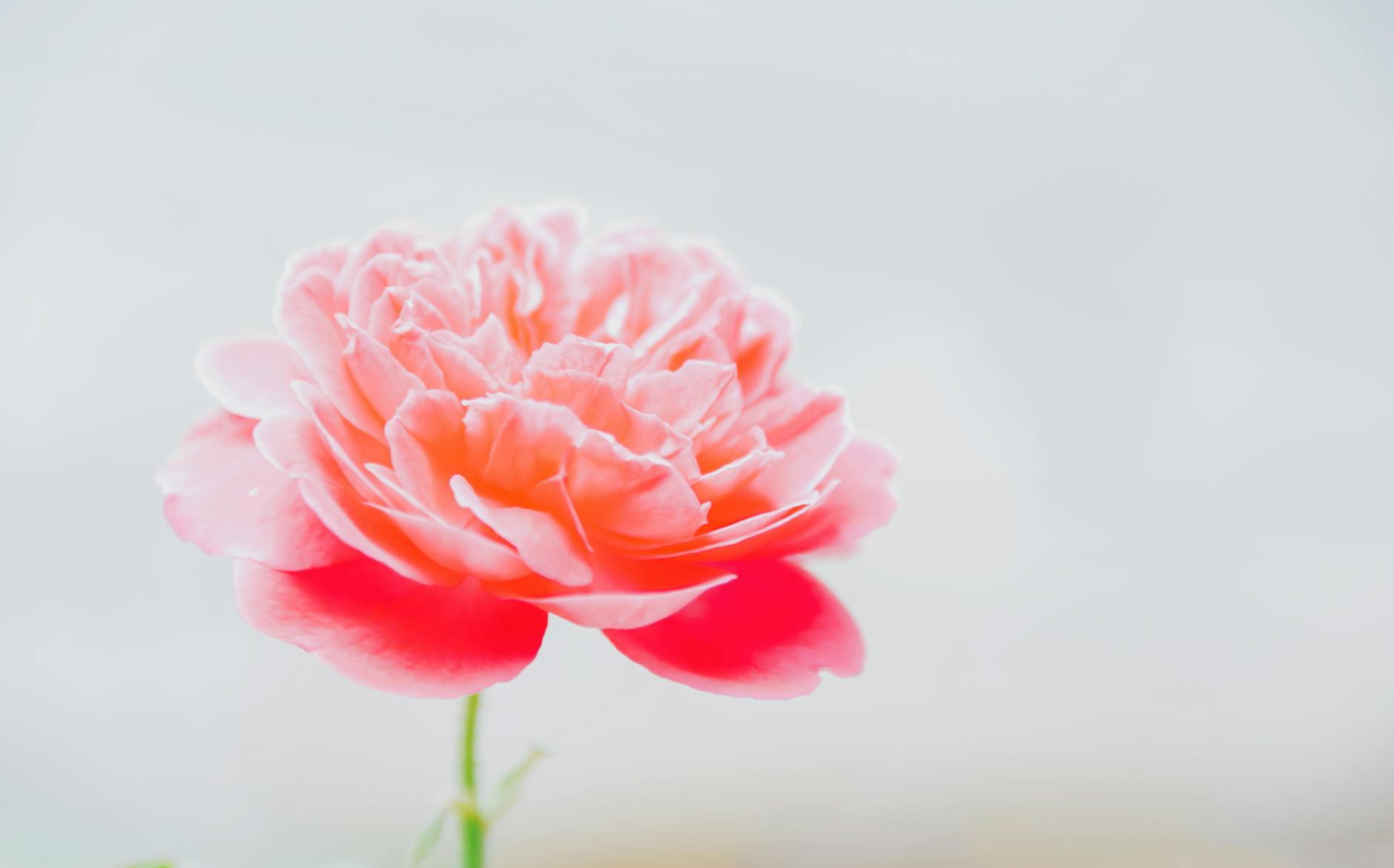
The peony is a flowering plant in the genus Paeonia. Depending on the species, these perennial plants can be herbaceous or woody. Native to Asia, Europe, and Western North America, peonies are known for their large, showy blooms. The peony flower comes in various colors including red, white, yellow, and purple. A typical peony flower will bloom for 7 and 10 days.
China’s Most Popular Flower
In 2019, the China Flower Association conducted a nationwide poll to determine what flower the people would want as their national symbol. The peony, the “King of Flowers”, won with 79% of the vote. The wintersweet came in second with 12%, while the orchid trailed behind at 2%. Other plants in this poll, like the chrysanthemum, camellia, lotus, sweet-scented osmanthus, Chinese rose, azalea, and narcissus all received less than 1 percent of the vote. (7)
Cross-Quarter Day: Beltane/May Day
The ancient Celtic calendar divides the year into eight parts. The four major divisions are known as Quarter Days and then there are four Cross-Quarter Days. The Quarter Days fall on the solstices and the equinoxes, while the Cross-Quarter days are the midpoints between each solstice and equinox.(8)
Beltane, or May Day, is a cross-quarter day celebrated on, or near, May 01. Beltane marks the halfway point between the spring equinox and the summer solstice. Beltane is a celebration of the upcoming growing season and a cleansing time. Beltane also marks the time when farmers lead their livestock to higher elevations for the summer, freeing up the lower lands for crop cultivation. (9)
Midsummer day is the next Quarter Day of the Celtic Calendar. Midsummer occurs on the summer solstice and is the midpoint of the growing season, halfway between planting and harvest.(8)
Haiku and Kigo
The kigo, or season word, is one of the key parts of the haiku. The Yuki Teikei Haiku Society provides us with the following explanation for why we use kigo in haiku.
“A kigo is a poetic device used in haiku to denote a season; it’s a powerful word or phrase that can conjure up many allusions, historical references, spiritual meanings, and/or cultural traditions. Its use in haiku, a poem of few words, is especially effective because of this power to expand its meaning beyond the literal and to create a larger aura of seasonal mood, historical/ literary context, and/or cultural implications.”(9)
Visit The Haiku Foundation’s “New To Haiku: What is a Kigo?” for more information
This Week’s Kigo
In The Five Hundred Essential Japanese Season Words selected by Kenkichi Yamamoto “young green plants”, “violet”, “dandelion”, and “wild rose” are relevant kigo
In Jane Reichhold’s A Dictionary of Haiku, “poppy”, “daffodils”, “dandelions”, and “first flowers” are relevant kigo.
According to the World Kigo Database by Dr. Gabi Greves, “peony” is primarily an early summer kigo. However, the peony may be associated with other seasons by adding other seasonal words. For example, “peony in the cold” would be a winter kigo, and “wild peony” is a late summer kigo.
With all this in mind, let’s read some haiku.
Basho
going beyond even
the art of wind and moon:
peony blossoms.
(translated by David Landis Barnhill)
this dew isn't cold—
the nectar of a
peony blossom
(translated by David Landis Barnhill)
From the heart
of the sweet peony,
a drunken bee.
(translated by Lucien Stryk)
Issa
shaded by the
samurai's umbrella...
the peony
(translated by David G. Lanoue)
sitting on her eggs
the hen admires
the peony
(translated by David G. Lanoue)
a hanging temple bell
a lantern...
and a peony
(translated by David G. Lanoue)
Buson
Falling peony blossoms
pile up together —
two, three petals
(translated by Allan Persinger)
After they’ve fallen,
their image remains in the mind –
those peonies
(translated by Steven D. Carter)
The peony bud,
When opening,
Shoots forth a rainbow
(translated by Nippon Gakujutsu Shinkokai)
Reichhold
bowing on short stems
flowers first day of spring
in the wind
Haiku Invitation
This week’s haiku invitation is to write a haiku or senryu referencing a seasonal flower near you.
Share your haiku in the comments below, or post on your page and link back. I can’t wait to read what you write!
You can support this newsletter work by donating at “Buy Me a Coffee” or shopping at our bookstore.

Thank You!
About the Haiku
Basho’s haiku were retrieved from “Matsuo Bashō’s haiku poems in romanized Japanese with English translations” Editor: Gábor Terebess. Issa’s haiku were retrieved from David G. Lanoue’s Haiku Guy. Buson’s haiku was retrieved from Foxfire: the Selected Poems of Yosa Buson, a Translation by Allan Persinger, and The Classic Tradition of Haiku edited by Faubion Bowers. Jane Reichhold’s haiku were retrieved from the Dictionary of Haiku.
- “The 24 Solar Terms”; China Educational Tours
- “6 Solar Terms of Spring”; China Educational Tours
- “24 Solar Terms: 5 things you may not know about Grain Rain”; ChinaDaily.com
- “Toona sinensis”: Wikipedia
- 72 Seasons App
- “Japan’s 72 Microseasons”; Nippon.com
- Yang Wanli; “China selects peony as national flower”: China Daily
- What Are the Quarter Days and What Do They Mean?; Almanc.com
- Bealtaine – Celebrating the Turning of the Celtic Calendar and the Festival of Uisneach
 SeasonWords.com
Mark,
As always you teach with joy. Thank you. I’ve some info about Peonies along with my verses at (Please see the link); Dandelion, Mums, and Peonies, Oh My!
<a href=” https://julesinflashyfiction.wordpress.com/2024/05/03/dandelion-mums-and-peonies-oh-my1p-xxiv-5-3/ “><strong>Dandelion, Mums, and Peonies, Oh My!</strong></a>
(I am still not sure why your link box comes up dark and unalbe to accept links. And I don’t no how to do the embed thing, which I think only works with ‘Block’. On paid ‘sites’ there is an option to put in links the old way… Another fix our ‘Hosts’ here, messed up, taking that option away from everyone.)
One for those who would rather not visit links…
~
her first wish
dandelion fluff
dispurses
With grand in spring, before and after photo of her wish was captured.
~
© JP/dh (Jules)
Jules,
I’ll check out the link momentarily, but I really do like the dandelion fluff haiku. It takes me back to childhood (and if I’m being honest, last week when I couldn’t help but scatter the seeds to the wind). Lovely, light haiku. ~Nan
I think we all have that child-like wonder to want to blow Dandelion fluff! Viva to our inner child!
I think you are right, Jules. Now, for the wish to come true.
I so believed the ants were necessary for opening the peony’s petals! I’m a bit saddened by science.
The ants still enjoy the nectar… So that is good. 🙂
Wait, I also thought peonies relied on ants to help them open. I mean, why else are they always covered in ants??
Hi Jules, Delightful poems for this week. They are all wonderful!
I am sorry to say I have no idea how to fix the commenting issues. I wish I did because I would love to get rid of the extra line spacing and make it easier to link up.
Thanks for your continue writing and sharing.
Have you considered… adding a Mr. Linky? I don’t know how to do that, but it is up at Colleen’s Tanka Tuesday.
I did consider that and I think I didn’t do it because you could just as easily post your link in the comments before. It seems like that isn’t the case anymore, so I may have to look again. Thanks for the suggestion.
🙂
There’s something magical about dandelions. Which this haiku captures.
The magic of weeds and those fluffy seeds 🙂
Hi Mark! Your articles are always informative and a joy to read. I especially enjoy the Haiku poems.
I’ve written one about our beautiful provincial flower which I recently saw in Wheatley Provincial Park.
Oh my, trilliums!
Flower of Ontario.
Food of white-tailed deer.
Adele,
Trilliums are such delicate flowers that I can understand why it is the flower of Ontario. Didn’t realize deer liked them so much, thanks for the information in your touching haiku. ~Nan
Thanks so much, Nan! I didn’t know about the deer eating them either, until I researched them for the haiku!
Lovely. I looked up the flower. Nice to know it is deer food 🙂
Thanks, Jules!
Hi Adele,
Trilliums are one of my favorite flowers, and ours are just starting to come up. I expect they will flower in about a week or so. Delightful haiku and we learned something new about deer and trillium!
Thanks, Mark! I can see why you like trilliums so much. They were stunning all scattered in the woods. Because of your haiku request, I learned more about trilliums.
Tracy…
Maybe the ants just like that particular ‘sap’ – Some myths… maybe they need to be left alone. But nature likes to tease us – and after all we are only human 😉
oops – in the wrong place…
Hi Jules, these are charming poems. “Her first wish” is quite wonderful. I am enjoying your peony haiku. I didn’t know about the old garden myth…very intriguing.
Fun to learn new things 🙂
It is! 🙂
Good on Ontario! You’ve good taste in flowers. The red trilliums are blooming in my bit of woods! We always called them stinking Benjamins growing up, but that doesn’t sound so good.
https://www.adirondackalmanack.com/2010/04/stinking-benjamina-trillium-that-by-any-other-name-would-still-smell-as-sweet.html
Hi D. Avery! That’s very interesting!
Hi Mark, hope you and everyone is doing well. It was interesting to discover cross quarter days and that May 1 is a cross quarter day. Basho’s poems resonate! I love the poems above of my fellow poets and will be back to read more, soon.
My friend held coffee clutches every Friday, inviting anyone she knew or heard was lonely or alone in the community.
a gathering
of irises
my friend’s memorial
I found out recently that irises were her favorite.
in the corner
of my garden
a clutch of irises
~ ~ ~
peony
the ruffle of its petal
along our walk
Dear Madeleine,
My sincere condolences for your loss. Thanks for reminding us of her; she must have been quite a beautiful person to hold coffee times for friends and those who were lonely. The haiku about irises you’ve written certainly honor her. Your peony haiku is so evocative of the “showiness” of peonies. Ours are just getting buds on them (and so far, no ants seen). Our irises have started to bloom, but not all of them. ~Nan
Thank you Nan, for you lovely and kind words. Awww, she was!🙂 Thank you for the compliments. I hope you receive a profusion of peonies and irises in your garden, soon!
Madeleine, I think we will have a profusion of peonies. There has to be 20-30 buds on the peony bush, which keeps expanding each year. If only half them bloom, I’ll be thrilled. Our newest gardening adventure is a rain garden, which my husband worked on while I was away visiting my son and his family. ~Nan
Here’s to more blossoms, Nan! A rain garden sounds wonderful! What a lovely adventure to come home to. 🙂 Hope to hear more about it in the coming weeks!
Madeleine, We went out and bought some grasses for the rain garden yesterday. We’ve yet to plant them because it rained all day. Already we are seeing a difference with it though, but I’ll try to share our adventures of our rain garden.
Sounds like fun, Nan! 🙂
Maddy, I’m sorry for your loss!
Your poems are lovely!
All the best,
Adele
Thank you Adele. I think your poems are lovely too. I am glad you wrote about trilliums. I looked them up–beautiful and useful too! 🙂
Thank you, Maddy!
🙂
Maddy – I just watch a visual pod cast about collective noun names. I think a ‘clutch of Irises’ is beautiful.
May your friends memories be as blessed as the stars above.
…ruffled petals…like Victorian peticoats 🙂
Hi Jules, awww. Thank you for your lovely comments and for bringing up the Victorian petticoat! 🙂
All those ruffles 🙂
Lol!…yes!! 🙂
‘A gathering of irises’ is such a beautiful way to honor your sweet friend, Maddy.
I absolutely adore your peony poem!
Awww, thank you Eavonka. That means a lot to me! 🙂
I love your peony poem too, dear Eavonka! And Happy Teacher’s Appreciation Day, tomorrow!! 😀
Hi Madeleine,
So sorry to hear about your loss. Your friend sounds like a very special person. “a gathering/ of irises” is a wonderful poem in her honor.
I am glad that you enjoyed this week’s poems. Basho seemed to like the peonies!
Hi Mark, I am sorry I have been a little slow in getting back. Yes, she was very special. Awww, thank you. The poems of the masters and fellow poets have been very inspiring.🙂
You’ve written three beautiful tributes to your friend. I especially like the imagery of the second one and how it is reminiscent of her with a clutch of her favorite flowers, standing almost like a group of friends.
Thank you, D! 🙂 That is what I had intended!
Another informative post, Mark. I enjoyed reading all the peony flower haiku by the master haikuists especially Basho’s drunken bee and Issa’s samurai. I also enjoyed learning about the quarter day divisions. Haiku about seasonal blooming flowers: Beltane…hyacinths’ blossoms swayin the breeze~Nancy Brady, 2024#offthecuffhaiku breathing in the scentof hyacinths on the wind–May Day~Nancy Brady, 2024 #offthecuffhaiku grandma’s grave…her peoniesin bloom ~Nancy Brady, 2017 https://www.nbsmithblog.sordpress.com
I was curious to see if the haiku would show up as written if I responded through the email. Apparently not.
grandma’s grave…
her peonies
in bloom
~Nancy Brady, 2017
Beltane…
hyacinths’ blossoms sway
in the breeze
~Nancy Brady, 2024
#offthecuffhaiku
breathing in the scent
of hyacinths on the wind
–May Day
~Nancy Brady, 2024
#offthecuffhaiku
…nice to have a place to visit…
All our hyacinths are long gone. The honeysuckles are blooming now. 🙂
Jules, Our hyacinths are fading quickly, but there are still some left around town. I find that there is something about the fragrance of hyacinths that even if you don’t see them, you know what they are. At least, for me, that is. ~Nan
When the timing is right hyacinths grace our spring celebration table… It only takes a few!
Yes, I can imagine, Jules. What a beautiful bouquet to grace your table each spring! To me, hyacinths are one of the most fragrant flowers I know. Often, I don’t even have to see them to know they are blooming because I can smell them.
That is true!
Oooh, I know you want to showcase the flower (and you do it so well in the 3rd poem), but what about just
Beltane…
blossoms sway
in the breeze
To take or toss, of course.
Thanks, E, for the advice. I was trying to highlight the hyacinths, but your suggestion improves it since it could be any spring blossom. ~Nan
Yes, but your other poem does the hyacinths justice!
Thanks, E. That’s kind of you to say. I originally had the word flirty in the first one since the blossoms look a bit like skirts blown up (Marilyn Monroe on the grate, just not as high a flip up), but I thought that was a bit much.Now, to rewrite them to be able to possibly publish them in the future. ~Nan
Hi Nancy,
I like the experiment of trying to comment through email to see what would happen. Thanks for trying! Did you do anything different when posting “grandma’s grave”? It looks like it is formatted correctly.
“breathing in the scent” is a wonderful poem!
I don’t know, Mark, how the one haiku came out okay, but the others didn’t. Whatever WP has done, I’m determined to figured out a way around it, either here or on my blog. There’s got to be some way. Thanks for the kind words on “breathing in” haiku; Truly it was just written; I wasn’t sure if it worked or not. ~Nan
Keep us updated if you figure out the formatting!
Will do, Mark.
Dear Nan, these are wonderful poems. The Beltane poem is so very charming. I really like Eavonka’s suggestion, too. I am so taken by your first poem. It is very touching that these peonies adorn the graves of loved ones who have passed.
Thanks, Madeleine. Appreciate your kind words on my haiku. I agree with Eavonka’s edit. It improves the universality of it. Yes, the peonies are special as was my grandma. ~Nan
🙂
That’s wonderful Nan, It’s icing on the cake when one has a special grandma! 🙂
Yes, she was special, and I like to think I was one of her favorite grandchildren. She painted a portrait of me when I was about five, and it hung in her house for years. When she died, I hoped to get the painting, but all I could find was the drawing that she worked from (and I still have it). Knowing her, she probably put another painting over it since her house was so small. I inherited her cookie jar, and the memories of her special sugar cookies that always filled it. 🙂 ~Nan
Lovely memories of a wonderful Grandmother! 🙂
Hard to choose a favorite. I like the heritage/memories of the peonies in the first poem. I like the scent and sway of the hyacinths.
Thanks, D, so kind of you to say about my haiku. Just glad when people read my haiku and get something from them. ~Nan
As always, the information and the beautiful photos and haikus as much appreciated… wonderful posts to look forward to on Fridays… this brought back some good memories and great prompt as always… thanks for brightening the blog feed!
Hi Lia,
Thanks so much for your kind words! I hope all is well and it is nice to hear from you.
You’re very welcome… yes all is well, and I hope same for you and yours!
Thank you Mark for sharing your vast knowledge on the seasons’ flowers, trees and shrubs. Love the information on the spring observances and traditions of other lands.
I loved Issa’s haiku:
a hanging temple bell
a lantern…
and a peony
Hi Suzette, I am glad to hear you like the poems for this week. I am amazed that I can usually find a poem from Issa no matter the season. He has so many haiku to choose from!
Awesome!
peonies
filling the room
with purple
I was lucky to spend summers in British Columbia where my dad’s home had peonies blooming. There were many different shades, but they filled the room with color and sweetness. A truly magical flower.
Hi Eavonka,
What a great memory you shared. I really like your shift in haiku. I was anticipating L3 being a smell, and then you made it a color. So good! It’s an aha moment and creates a pause for the reader. Thanks for sharing.
Oh my gosh, Mark, I went back and forth on scent or color, so your comment makes me so happy!
The peonies I had (so long ago) I was always afraid to take in – as they had so many ants about them!
Some flowers can be quite heady. Roses smell different at different times of the day 🙂 Which is why purfumes are so expensive because of trying to get the ‘same’ sent.
You just shake the ants off each blossom and live with what’s left. The beauty was always worth it!
While I enjoy creep crawlies outside… not so much inside.
One year someone gave me a plant… that bloomed aphids (inside)..yuk! 🙂
Eavonka,
Like your use of the synesthesia of a color (purple) filling the room in this haiku. Peonies are such beautiful, showy flowers. Very dramatic and do fill the room with their lushness. ~Nan
Yes, they definitely have a romance to them. Hence the reason they are used in so many weddings!
Eavonka, Between my grandmother’s and great-aunt’s grave is a huge peony plant. She wanted to continue its life from her garden. At this point, it’s really overgrown, to be honest. The one in my back yard is a start from some of the roots from it. It gets bigger with each year’s growth. Actually, many of the peonies I had through the years started from my mom’s peonies the same way (which may have been originally from one of my grandmother’s plants). Almost each place I moved to throughout my adult life, I planted roots from her peonies, and it would take a year or two to get the lush blooms. Then I’d move and have to start over again. I keep thinking I’d love to have some deep burgundy and pale yellow ones, but, so far, I never think about until all the nurseries around here are sold out for the season. I suppose that is why I so like my haiku about them that was in Stardust Haiku Journal and then reprinted in Enchanted Garden in April. the can-can…peonies show offtheir crinolines~Nancy Brady, 2023published in Stardust: Poetry With a Little Sparkle Issue #78, June 2023
Multi-generational peonies is amazing! I adore the poem you wrote, and I’m so glad it got published again.
Thanks, E. I really like it, too, and that it was chosen (and translated) for Enchanted Garden, too, makes me happy. I am trying to come up with five of my published haiku that represent this area of the country, and that one is in the running.
Hi Eavonka, your poem is marvelous. I love the surprise ending in L3, too. The alliteration of “peonies” and “purple” add such a rich sound… perfect!
The summers you spent at your dad’s house in British Columbia sound lovely!
Thanks for your lovely compliments, Maddy. I almost used pink, but I’d done pink moon last week. So I made sure there actually were purple peonies just to get the alliteration.
Ah. This is spectacular. Great twist. There is a scent to purple. And a place for it of course. Love it. Xoxo
Thank you so much, Selma! You are so right. I even had a poem published that ended with ‘the smell of purple’!
You filled a room and more with those six words. Very cool.
Wow, you made my night, D.
Can’t even choose a favorite out of this week’s examples, Mark, as they are all absolutely wonderful. Here’s my contribution:
brightly colored cups
spread spring cheer and unity
neighborhood tulips
Tracy…
Maybe the ants just like that particular ‘sap’ – Some myths… maybe they need to be left alone. But nature likes to tease us – and after all we are only human :)
I was ‘garage sailing…’ (for about an hour and I saw some huge red poppies up… I guess it is too late to plant my seeds… again.
I always miss some window of opportuntiy with my seeds. 🙂
I did like seeing the tulips… they are mostly gone here, now. Reds and yellows, some fancy ones too. 🙂
Tracy,
Tulips are definitely that and more. Your haiku describes them well. Have you considered for the third line something like ‘neighborhood walk’ so that it is more of an aha moment for the reader. Something like neighborhood walk/ brightly colored cups spread/ spring cheer and unity or spring walk/ spreading cheer/ brightly colored cups Just a thought…Nan
Yours are good suggestions, Nan. I dashed that one off without a whole lot of thought and I guess it shows. 🙂
Tracy, I dash off so many haiku especially what I call my off-the-cuff haiku so I understand what you are saying and will admit I often do the same thing, Afterwards I write several similar haiku (changing up words, word order, and/or line order, etc.) trying to express my haiku moment better. Sometimes they work, other times, not so much. I am always getting suggestions on how I can improve them (see Eavonka’s suggestion on one of mine this week), and I learn from them (or at least I try to learn from the suggestions). No matter how long I’ve been writing haiku (or just living my life), I believe in what Michelangelo supposedly said, “ancora imparo” at age 87. It means “I’m still learning.” ~Nan
YES to “I’m still learning”! 🙂
Hi Nan and Tracy, I love this conversation. I find that “still learning” is a great way to approach most things in life.
Mark,
It is good to be a lifelong learner. Although I’ve retired from my career, I still do continuing education, attempting to keep up. In the last month, because of the information I just read in my pharmacy journal, I helped a friend with her new problem/condition. ~Nan
🙂
Cheerful little things, tulips are. I just adore them. The tulips are done here. And the poppies are barely waving. Spring is wonderful.
Your haiku is lovely Tracy. Thanks.
Oh, thank you, Selma. Here’s to tulips!!!
This reminds me of a village I go through twice a week and their library steps are crammed with crates of tulips, every spring. Those blooms slow traffic, pedestrian and vehicular.
Show-stopping tulips! Love it!
Thanks Mark for another inspirational post. Loved the spotlighted haiku.
Here is my response to this week’s prompt -‘Seasonal Flower’
https://goffjamesart.wordpress.com/2024/05/04/poetry-haiku-monastic-garden-a-poem-by-goff-james
Have a great day.
Hi Goff, Delightful poem for this week’s prompt! Thanks so much for sharing and I hope you have a great weekend!
The Baron,
I like most spiders… have to be careful of Black Widows and Brown Reculse ones though. 🕷🕸
What a unique haiku moment, Baron. I can’t claim to have ever seen a green-eyed spider, but then unlike Jules, spiders REALLY creep me out. ~Nan
Hi Baron, This is a moment to capture! Thanks for sharing this one!
A wonderful haiku, Baron! A white spider with green eyes, wow!
Love this. I don’t know that particular spider, but I know moments, encounters, like that.
We took a vacation in the mountains northwest of Ashville. It was wonderful. Before we left our house we had a peony just beginning to bloom. We had hopes, but . . .
after vacation
we saw our our peony bloom…
passed its view-by date
But still the mountains were wonderful. Our favorite place to be.
Oh, and surprise, I liked the Issa haiku best. Thanks Mark.
Peace,
LaMon
Hi LaMon, It sounds like a nice trip to the mountains. Bummer you missed the peony bloom. They do have a short life span. I am so glad you enjoy both the selected haiku and the haiku in the comments. There are a lot of talented writers in this group!
LaMon,
Glad you enjoyed your visit to the mountains, but what a shame to miss the beauty of your peony. “View-by date,” what a great turn of phrase in your haiku. ~Nan
Ha! The downside to vacationing is missing the blooms of home. But you got this haiku. (And maybe a t-shirt?)
I spent a while reading through all the responses. What a great bunch of haiku blossoming from all of your fertile minds!! Thanks to everyone.
Peace,
LaMon
Hi LaMon: the mountains are a great place to vacation…such peacefulness. Your haiku is lovely…that peonies are so short lived helps me appreciate them even more.
Pinching Peonies
One flower per stem,
I pinch excess peony
buds, all hard choices
Hi Rick, Thanks for adding to this week’s conversation, and highlighting that it takes work for those peonies to thrive. . Wonderful!
Well, to be honest, peonies thrive just as well without my removing about 2/3 of all the buds. Maybe even better. This is all for human benefit. The flowers are larger when they have less competition. The sense of sadness I feel didn’t come through, I guess — the Sophie’s Choice of which buds live and which ones die.
Hi Rick, this is a very intriguing poem… quite a few interpretations!
Rick,
Never realized you are supposed to pinch off most of the buds. I suppose the tiny, undeveloped ones I could do, but not the bigger ones. Definitely hard choices, indeed, as shown by your haiku. ~Nan
It’s tough. But the peonies do benefit somewhat, I think, from our desire for bigger flowers you get by pinching down to one bud per stem. They’re able to spend more energy and dedicate more nutrients on fewer, larger seeds. But since most of our peony cultivars are sterile anyway, I suppose it’s a moot point.
The ant question is an
Interesting one. The peony produces sugary sap on the tops of note buds to attract ants, not because the ants open the buds (the buds open just fine without them) but to deter herbivores like caterpillars and aphids and rabbits. The technical term for this sticky sap is an “extrafloral nectary.”
Thanks, Rick, for the explanation on the pruning of the buds as well as the explanation on extrafloral nectary. Both explanations were enlightening. Of course, I looked extrafloral nectary up since I have never heard of it and wanted to know more. All that learned plus what you wrote certainly makes more sense now. Again, thanks. ~Nan
Sometimes gardening is goddening, tough decisions to make and green thumbed heavy handedness. Perfect for a haiku!
howdy, All. 👋
I’ve seen all but one peony here. 😉 sharing the small joy with you
small everyday joys
spring slowly slipping away
ant on the peony
https://selmamartin.com/share-the-wealth-joy-is-our-natural-state/
…and other joys I found as expressed in the post. Thanks for inspiring it. Loved all the haiku you shared this week. Thanks, Mark.
Hi Selma, This is a wonderful haiku! I like how your verse capture the moment and could still point us toward larger questions about life. Very nice!
Thanks dearly.
Selma, a very lovely poem and poignant too…hinting at “the bitter sweetness” of life.
Thanks Maddy. Bittersweet yes. Like the slipping away of seasons. Intuitive observation. Thanks.
Nicely written, Selma. What a positive haiku. I haven’t seen any ants on my peonies yet, but I have plenty of buds. I just have to wait another couple of weeks (our peonies usually bloom about the week of Memorial Day) to see them blossom. ~Nan
Then you’ll get a lovely riot. 😆 how lovely I see that in my mind’s eye already. Thanks.
Selma, I believe it will be a quite colorful riotous when they bloom. Very pinkilicious!
Verily verily! 👏🏽
Agreeing with the others comments. There’s great perspective and focus in this haiku.
Aww. Thanks again, D. Bless you.
https://benjamintonkin.wordpress.com/2024/05/06/6-5-24-haiku/
May’s canvas
fog white sky drips
maple flowers
overture to green
spring’s first blush
red maple flowers
Oops, that’s meant to be two separate haiku. Red maple flowers have really caught my eye lately but most are now on the ground and leaves are unfolding.
I’ll be back as I can to read more haiku here.
Hi Dede, I really like “fog white sky drips/maple flowers”. Such a cool image.
Our red maple is just starting to flower. I really noticed it this morning when I was out with the dog.
WordPress did an update on comment formatting and it is not friendly to the three line haiku.
Thanks Mark. You know these don’t come easily. Haiku is hard!
Don’t worry about the formatting. We/I get it. Spring’s first blush—red! How lovely is that! Thanks. 🙏
Thank you!
Hi D, these are great poems. Your second poem resonates, “…spring’s first blush..”, wonderful imagery.
Thank you, I’m glad if it worked.
Yes, they both did! 🙂 I am looking at maple trees in a new light!
D, I like both of these haiku. I never thought about the fact that those “red things” were maple flowers. I know the next time I see them on the sidewalk, I’ll examine them closely.
As for the formatting, yes, WP has done something to include extra spaces between the lines. We’re all trying to figure it out. Every time I think I have it figured out, I’m wrong.
Who will solve this mystery?
~Nan
They’re beautiful up close, and quite colorful.
Word Press. For fun they move the furniture in homes of blind people. Funnier still is that they call their “helpers” Happiness Engineers. That’s sacrilege.
Anyway, one trick is to just put a period on a line to hold the space. I forgot that trick.
D, After reading about the maple flowers, I asked my husband if he knew about them. Of course, he did. I just never examined them closely enough and thought they were just another “thing” cluttering up the sidewalk. Now, it’s the helicopter seeds of the maples so obviously the tiny buds/flowers were pollinated. You always have the answers and I love, love, love your humor. Happiness engineers, indeed. Now I have this vision in my head of the HE rubbing their hands together, a gleeful smirk upon their faces saying, “How can we mess them up next? Nahahayah!”* *Or however an evil being says it
All of my Maple Flowers have turned to helicopter seeds 🙂
Which the rain has assisted in taking down…
A day late… https://melissalemay.wordpress.com/2024/05/10/bleeding-hearts/
Hi Melissa, It’s never to late to share your poetry!
☺️