September 16 – September 22 is the 38th week of 2024. This week, we are in the meteorological season of fall but remain in astronomical summer until the autumnal equinox on Sunday (Sep 22) at 8:43 am.
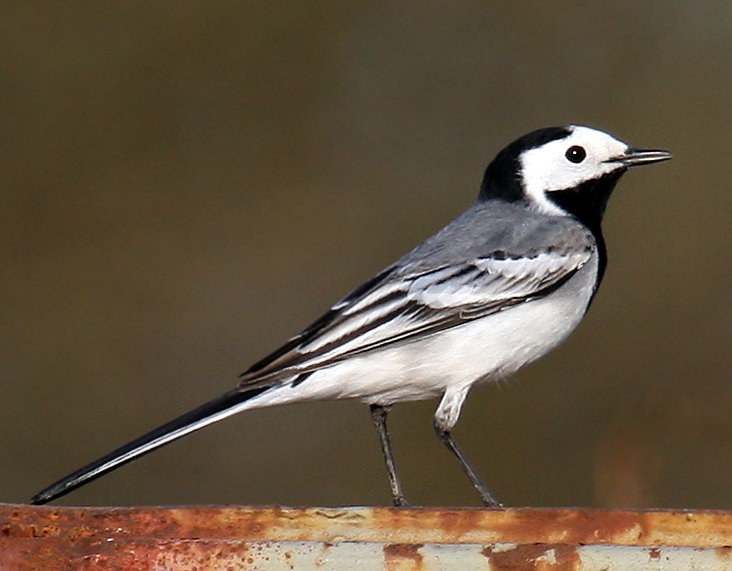
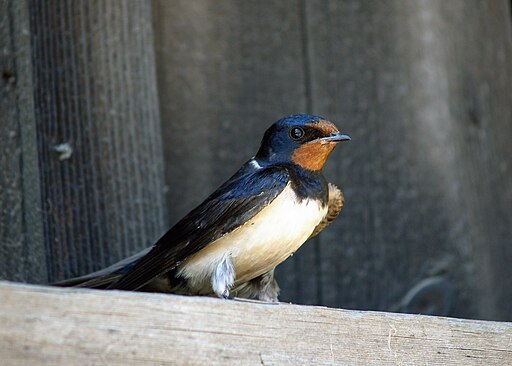
This week, we are also in the Solar Term of White Dew (Sep 08 – Sept 21), and the micro-seasons of “Wagtails Sing” (Sep 13 – Sep 17) and “Swallows Leave” (Sep 18 – Sep 22).
Basho, Issa, Buson, and Reichhold wrote the poems selected for this week.
The 24 Solar Terms
The 24 solar terms were created by farmers in ancient China (206 BCE and 24 CE) to help guide their agricultural activities. Each solar term is 15 days long and is based on the climate around Xi’an, the capital of China during the Han Dynasty (206 BCE to 220 CE). (1)
White Dew
White Dew is the fifteenth Solar Term of the year and the third Solar Term of Autumn. Bailu (白露) is the Chinese name for this season. Bailu (白露) means “white dew marks the beginning of cool weather”.(2)
Seasonal Fruit
Grapes and Longan fruit become widely available at this time of year. Both types of fruit are sweet and have traditional medicinal properties. Grapes “dispel internal heat and expel toxins”, (3) and Longan fruit supports the spleen, nourishes the blood, and calms the nerves.(3)
The 72 Seasons
The 72-season calendar was established in 1685 by Japanese astronomer Shibukawa Shunkai. Each season lasts for about 5 days and offers “a poetic journey through the Japanese year in which the land awakens and blooms with life and activity before returning to slumber.”(4)
The micro-seasons for this week are “Wagtails Sing” (Sep 13 – Sep 17) and “Swallows Leave” (Sep 18 – Sep 22).
About Wagtails
Wagtails are small passerine (perching) birds belonging to the genus Motacilla. They are insectivores, known for their long tails and distinctive tail-wagging behavior, which gives them their name. Wagtails typically live near waterways, roost in trees, and build their nests on the ground.
There are 13 species of wagtails worldwide. In Alaska, both the Eastern Yellow Wagtail (Motacilla tschutschensis) and the White Wagtail (Motacilla alba) can be found. While in Japan, they have the Japanese Wagtail (Motacilla grandis). The Japanese Wagtail is a non-migratory species(6,7)
About Swallows
The term “swallow” refers to birds in the family Hirundinidae. There are 86 species of swallows found across the globe.
Swallows are small birds characterized by pointed, narrow wings, short bills, and smal feet. Many species have forked tails and display plain or metallic blue and green plumage. Swallows are highly aerial, spending much of their time in flight as they hunt for insects. They nest in various locations, including tree cavities, sandbanks, and man-made structures.
In the United States, eight species of swallows are commonly observed: the Northern Rough-winged Swallow, Bank Swallow, Barn Swallow, Purple Martin, Tree Swallow, Violet-green Swallow, Cliff Swallow, and Cave Swallow. Of these, the Barn Swallow is the only species found in North America and Japan.(8,9)
Haiku, Kigo, and Saijiki
The kigo, or season word, is one of the key parts of the haiku. A kigo “a poetic device used in haiku to denote a season.”(6) It can “conjure up many allusions, historical references, spiritual meanings, and/or cultural traditions.”(7) When used in a haiku, it is “especially effective because of this power to expand its meaning beyond the literal and to create a larger aura of seasonal mood, historical/ literary context, and/or cultural implications.”(10)
A saijiki is a dictionary of season words, or kigo, paired with haiku using that season word. A saijiki is a reference and tool for the poet that is divided into five seasons (Spring, Summer, Autumn, Winter, and New Year) and separated into seven categories.
In The Five Hundred Essential Japanese Season Words selected by Kenkichi Yamamoto, each of the five seasons has seven categories of words.
- Seasons
- Heavens
- Earth
- Humanity
- Observances
- Animals
- Plants
While this document doesn’t include haiku for each season word, it is helpful in understanding what words may be kigo.
In A Dictionary of Haiku, Jane Reichhold’s English language saijiki representing her location and experiences, she follows the five seasons structure with some slight differences in categories. Reichhold’s categories are:
- Moods
- Occasions
- Celestial
- Terrestrial
- Livelihood
- Animals
- Plants
Both Reichhold’s Dictionary and Yamamoto’s Essential Season Words are helpful in understanding the role and use of kigo in haiku.
This Week’s Kigo and Haiku
In The Five Hundred Essential Japanese Season Words as selected by Kenkichi Yamamoto, “wagtails” and “rice sparrows” are relevant kigo for this week.
In Jane Reichhold’s A Dictionary of Haiku, “migrating fowl”, “cranes/storks come”, and “crow” and “quail” are relevant kigo.
Now, let’s read some haiku.
Basho
Within my winecup
Let no mud fall,
O, you flocking swallows.
(translated by Thomas McAuley)
sparrows from rice fields
flock to the tea plantation,
seeking refuge
(translated by Sam Hamill)
Issa
maybe the wagtail
put it there...
lantern for the dead
(translated by David G. Lanoue)
when you return
don't forget my house!
departing swallows
(translated by David G. Lanoue)
the swallows too
pray for the town...
river shrine
(translated by David G. Lanoue)
Buson
On a painting of Otsu
scattered droppings —
swallows
(translated by Allan Persinger)
On ancient Japanese roads
in shabby straw shrines and houses
swallows
(translated by Allan Persinger)
Reichhold
migrating ducks
changing colors of the lake
to autumn
cold wind ruffles
breast feathers of a gray bird
rumors of war
Haiku invitation
This week’s haiku invitation is to write a haiku or senryu about a local bird.
Share your haiku in the comments below, or post on your page and link back. I can’t wait to read what you write!
Formatting Note: To eliminate the spaces between the lines of your haiku, hit shift-enter at the end of the line. For example,
one (shift-enter)
line two (shift-enter)
the third line (shift-enter)
A Local Saijiki Project
The Yuki Teikei Haiku Society, explains that a saijiki is useful for poets, “naturalists, and people interested in the natural and cultural history of an area.” The saijiki contains seasonal words, plus haiku that demonstrate the poetic qualities of the words.
The creation of a local saijiki, one that represents an individual community, always felt like a big, daunting, and yet worthwhile project. So, I have decided to try and create my own saijiki. I am not sure how this will turn out, but if you are interested in joining me and creating your own saijiki, I have created a saijiki worksheet to get you started. If nothing else, this is a good exercise in noticing the natural world and writing haiku. Let’s see where this project takes us!
About Today’s Haiku
Basho’s haiku were retrieved from “Matsuo Bashō’s haiku poems in romanized Japanese with English translations” Editor: Gábor Terebess. Issa’s haiku were retrieved from David G. Lanoue’s Haiku Guy. Buson’s haiku was retrieved from Foxfire: the Selected Poems of Yosa Buson, a Translation by Allan Persinger. Jane Reichhold’s haiku was retrieved from the Dictionary of Haiku.
References:
- “The 24 Solar Terms”; China Educational Tours
- “6 Solar Terms of Autumn”; China Educational Tours
- “24 Solar Terms: 8 things you may not know about White Dew”. English.gov.cn
- 72 Seasons App
- “Japan’s 72 Microseasons”; Nippon.com
- “Wagtail”; Wikipedia
- “Japanese Wagtail”; Wikipedia
- Heisman, Rebecca. “Swallows of the United States”; American Bird Conservancy
- “Swallow”; Britannica
- “New To Haiku: What is a Kigo?”
 SeasonWords.com


Mark,
Thank you again for all of your information. I have three pairs this week with an image an info at my link. Spelling makes a difference! As I found out when trying to find out about the “Dragon’s Eye” Fruit the Longan fruit. I’ve put one verse here the other two at the link; https://julesinflashyfiction.wordpress.com/2024/09/20/nd-09-20-xxiv-issho-ni-kaita-retrans/
dragon’s eye
closest I’ve tasted
lychee fruit
Loganberries, not a common delight for our local barn swallows.
© JP/dh (Jules)
Hey Jules, I confess today is the first day I have visited your site. It won’t be the last!! Wonderful haiku and information. Peace, LaMon
Hi LaMon, I agree that Jules site is great. She always adds another layer of information about something from the week.
Thank you LaMon – always happy to share what I learn.
Hi Jules, I appreciate your research on the Longan fruit and the mythology of swallows. Excellent job this week!
Learning keeps us young! Glad to add to the community, here.
Hi Jules, “dragon’s eye” is a most delicious poem. I love your monaku, as well.
Thanks 🙂
First, I love all three of Issa’s haiku. (I have to wonder if any similar haiku would be published in Frogpond these days?)
Second, from my s l o w walk through Aldridge Gardens in Birmingham:
red-shoulder hawk
screaming through the sky
suddenly : silence
Peace,
LaMon
Should be “red-shouldered” hawk. Spelling matters, as Jules pointed out! If you looked it up without the ‘ed’ it wouldn’t be found! Peace, LaMon.
Hi LaMon, I also did a little search and yes, it seems that “shouldered” is correct by the ornithologists. Is “shoulder” more common for the non-birders. This makes me think about how many people up this way refer to the Canada goose as the Canadian goose. Canada is the correct name, but we all know what someone is talking about when they say Canadian Goose.
It also looks like the re-shouldered hawks left my area for the winter. The Merlin App says it is highly unlikely that I would see on now.
Yes, I have always said “Canadian” goose or geese until today! As I was walking, I opened my app that identified bird songs. I heard the goose flying overhead and the app said Canada Goose! I’m 74 and still learning something new every day. Now if I can just remember what I learned yesterday 🙂
Peace,
LaMon
This one is perfect for this sunny September morning as I notice how quiet all the birds are . . . but not the hawks!
Hi LaMon, red-shouldered hawk is an intriguing poem, beautiful…I love the contrast between L2 and L3 and that it ends with the word “silence”. (I was somewhat in a hurry and didn’t read the poems before posting and wrote one about a red-shoulder hawk who had been perched in our backyard, recently.)
LaMon,
I am still learning much about birds. I know I have Red Tailed Hawk in my area. I probably also have Red Sholdered Hawk too.
Red-shouldered hawks are smaller than red-tailed hawks and are about the size of a large crow. They have rusty-red shoulders, black and white barring on their tails, and a red chest. They are known for their clear whistled calls, which are especially noticeable in the spring.
I’ve seen hawk go after squirrels. But I have rarely heard them.
Another delightful post, Mark. Have a fabulous weekend.
Hi Mary, Thank you for the kind words! Have a good weekend.
Thank you, Mark, a lot to contemplate in this post, enough to last until next Friday!
last sun of summer
yellows your breast –
which warbler are you?
yellow meadow
sky above empty
of swallows
Hi Griffin,
I really enjoyed these two. They really highlight the change of seasons and bird migration. Wonderful!
Hi Griffin, I agree with Mark and Suzette, both your haiku are wonderful! I love how you have “yellow” in both of them. In your second poem, I am intrigued how the surprise begins in the second line.
Wonderful poetry Griffin. I like the sense of freedom and the expanse (sun, sky) in your poems. Well done!
Hello everyone! Thank you Mark for such an interesting post. I loved reading about wag tails and swallows.
Recently a neighbor knocked on our door and informed us that there is an infestation of field mice in our neighborhood. (Actually I found out from a neighbor they are really voles and are different from mice…voles love to dig and generally they live in groups.)
afraid to step out
in the back garden
a mouse
~ ~ ~
round face round eyes
suddenly takes flight
a robin
mouse on the brain
~ ~ ~
brown hawk
settles among the
sunlit foliage
golden feather
The hawks in this area are called “red shouldered hawks” and some of their feathers look golden. We also have cliff swallows, looking forward to getting reacquainted with them. There are plenty of robins.
Hi Maddy, LaMon also wrote about red-shouldered hawks. Interesting!
I really like your first one. It is open enough to allow the reader to wonder who is afraid of the garden the mouse or the poet?
Thank you Mark. I appreciate your feed back very much. I really enjoyed LaMon’s haiku about the red-shouldered hawk. I got goose bumps reading it. I didn’t realize until a month or two ago, when I looked up on several sites that one of our hawks in Northern California is also called by the same name. I am sure that is the one who visited us around that time… (I was in a rush today and didn’t read the poems first. I feel remiss about this oversight.)
Lol, Mark, I might be a little more afraid! 🙂 We’re going on a road drive early tomorrow morning. I will look forward to reading more poems as they come along and all the blogs.
Hello Maddy,
I like your three poems. Your reference to flight in all three, beautiful and subtle…in your first poem as well.
Thank you for the excellent and intriguing information on voles! Wow, I had not heard of them before.
Hope you have a lovely weekend. Blessings!
Your feedback is appreciated, Suzette…they are quite interesting and new to me, as well! …Thanks, hope you have a lovely morning. Blessings to you, too! 🙂
I’ve got Red Tail and Cooper’s hawks and eagles… and all kinds of birdies. But I had to look up Red Shouldered Hawks.
I’ve got voles too… but the neighbors free roaming kitties seem to keep them at bay. The voles and chipmonks tend to run the other way when they see human beans!! 😀
A whole fleet of birds! Jules, I haven’t heard of red tail hawks, before. They do the same here… quite skittish. We’re going to apply peppermint spray to deter them.)
Thank you Mark for your always useful and interesting information. I did not know about the benefits of grapes and or Longan fruit. The swallows have long gone from the Northwest heading south. Other birds stay around. I saw a lovely dove on my balcony this morning how coincidental to your post. I love all your haiku example/selections for ths week. Reichhold brought a smile with:
migrating ducks
changing colors of the lake
to autumn
Have a great weekend. I might do two poems this weekend to share. If I am inspired…LOL
Hi Suzette, So interesting to hear about the dove. Thanks, as always, for the support! Have a great weekend.
Hi Suzette, I must have rushed through the poems of the masters today as well…as I missed Reichhold’s beautiful poem on migrating ducks. I am glad you posted it. 🙂
Hi Maddy,
You are very welcome! Have a good one!
Hi Suzette:
…Have a great one too! 🙂
Wow, Suzette:
I love your poem. So full of imagery, “coat tails”. I like the suprises in both L2 and L3.
Thanks Suzette, for your feedback…It helps a lot!🙂
Blue jays are at work.
Their song is not so pretty.
But they are my friends.
Hi Adele:
Your haiku about blue jays is a delight. I appreciate that even though they don’t sound so pretty, you are still there for them!
Thank you, Maddy!
Your welcome, Adele. 🙂
Hi Adele, I really like this one and I appreciate you making friends with the blue jays!
Thank you, Mark! So happy you enjoyed it! Sorry for the late reply. We were in Calgary visiting my son. I saw a snow-shoe hare and a black-billed magpie there!
Thanks, Mark, for another informative post. I’ll read and respond to all the haiku comments later as I am heading out to volunteer at a local festival this afternoon. For now, here are some bird haiku:
blue jays call
screeching for peanuts
I am well-trained
~Nancy Brady, (published in Three Breaths 2013)
summer walk
across the fence
blue jays’ argument
~Nancy Brady, (published in Three Breaths, 2013)
(If you can’t tell, my favorite bird is the blue jay.)
heavy snow
cardinals and sparrows
under the feeder
~Nancy Brady, 2024
#offthecuffhaiku
http://www.nbsmithblog.wordpress.com
Hi Nan, I love your humorous “Blue Jay’s Call” haiku, the third line had me grinning:). Summer Walk resonates with me too…Yes, I can tell he’s your favorite, lol:) I love that you and Adele both appreciate blue jays. A couple of them visited us for a few days early in spring….hope you had a great time at the festival.🙂
Hi Nan,
“Blue Jay’s call” is resonating with me. I have actually been well-trained by the Cardinals and the downy woodpeckers. They come to the tree outside our backdoor at about 5:00 pm every day and let us know they are here for their dinner.
https://benjamintonkin.wordpress.com/2024/09/22/17-9-24-haiku-reblog/
https://benjamintonkin.wordpress.com/2024/09/22/22-9-24-haiku/
family of yellow-breasted birds
taking turns swooping, diving and splashing
in our stone-walled pool:
you are most welcome!
a flock of tiny ones
passing through our fig, pear and peach trees
gently twittering and cheeping
eagles above,
slowly circling Sky Lords
not yet deigned to come down for a visit….
Hi Barron, all three of these poems are heart warming and charming. The first two resonate with me.
HI Baron, I really like “a flock of tiny ones”. That poem makes me smile and I can almost see the birds darting in and out of the trees!
Hope you will be back soon, Eavonka…you are missed!
Hi Mark and fellow poets,
Sally and Michele, editors from Solitary Daisy, mentioned Mark’s post from this week, “Swallows Leave”. They ask us to write a haiku, “…referring to the departure of a bird specific to your area…”, (if you would like to…please submit one or two by Wednesday, October 2, midnight eastern time.)
Here is their link:
https://thesolitarydaisy.ca/2024/09/the-solitary-daisy-issue-36
Hope everyone is having a nice day! 🙂
Hi Maddy,
Thanks for sharing this opportunity to submit to Solitary Daisy!
Your welcome, Mark. 🙂 Hope you and all are having a nice morning!