October 07 to October 13 is the 41st week of the year. In the northern hemisphere, this period falls within the meteorological and astronomical fall seasons. The Solar Term for this week is Cold Dew (Oct 08 – Oct. 22) and the micro-season for this week is “Wild Geese Return” (Oct 08 – Oct 12).
Basho, Issa, Buson, and Reichhold wrote the poems selected for this week.
The 24 Solar Terms
The 24 solar terms were created by farmers in ancient China (206 BCE and 24 CE) to help guide their agricultural activities. Each solar term is 15 days long and is based on the climate around Xi’an, the capital of China during the Han Dynasty (206 BCE to 220 CE). (1)
Cold Dew
Cold Dew, is the seventeenth Solar Term of the year the fifth Solar Term of Autumn. Hanlu (寒露) is the Chinese name for this season. Hanlu (寒露) means even lower temperatures should be expected.(2)
Chrysanthemum liquor is a traditional drink during Cold Dew.(2) The chrysanthemum has been used in Chinese medicine for thousands of years. When consumed as an herbal tea, it is said to to treat respiratory issues, boost the immune system, reduce blood pressure, and improve sight.(3).
The 72 Seasons
The 72-season calendar was established in 1685 by Japanese astronomer Shibukawa Shunkai. Each season lasts for about 5 days and offers “a poetic journey through the Japanese year in which the land awakens and blooms with life and activity before returning to slumber.”(5)
The micro-season for this week is “Wild Geese Return” (Oct 08 – Oct 12).
About “Wild Geese Return”
“Wild Geese Return” (Oct 8 – Oct 12) is the counter-season to “Wild Geese Fly North” (Apr 9 – April 13). These two micro-seasons focus on the migration patterns of geese.
It should be noted that depending on your geographic location, your experience with bird migration may differ. For example, in the northeastern parts of the United States geese depart in autumn and head south for the winter. However, for individuals residing in more southern regions, this pattern is reversed, with geese arriving in autumn and departing in the spring.
The White-Fronted Goose
In Japan, the White-Fronted Goose accounts for about 90% of the goose population. During late September and early October, these geese return to the rice paddies and marshes from their summer home in Siberia. They typically remain in Japan until late March or early April.(7)
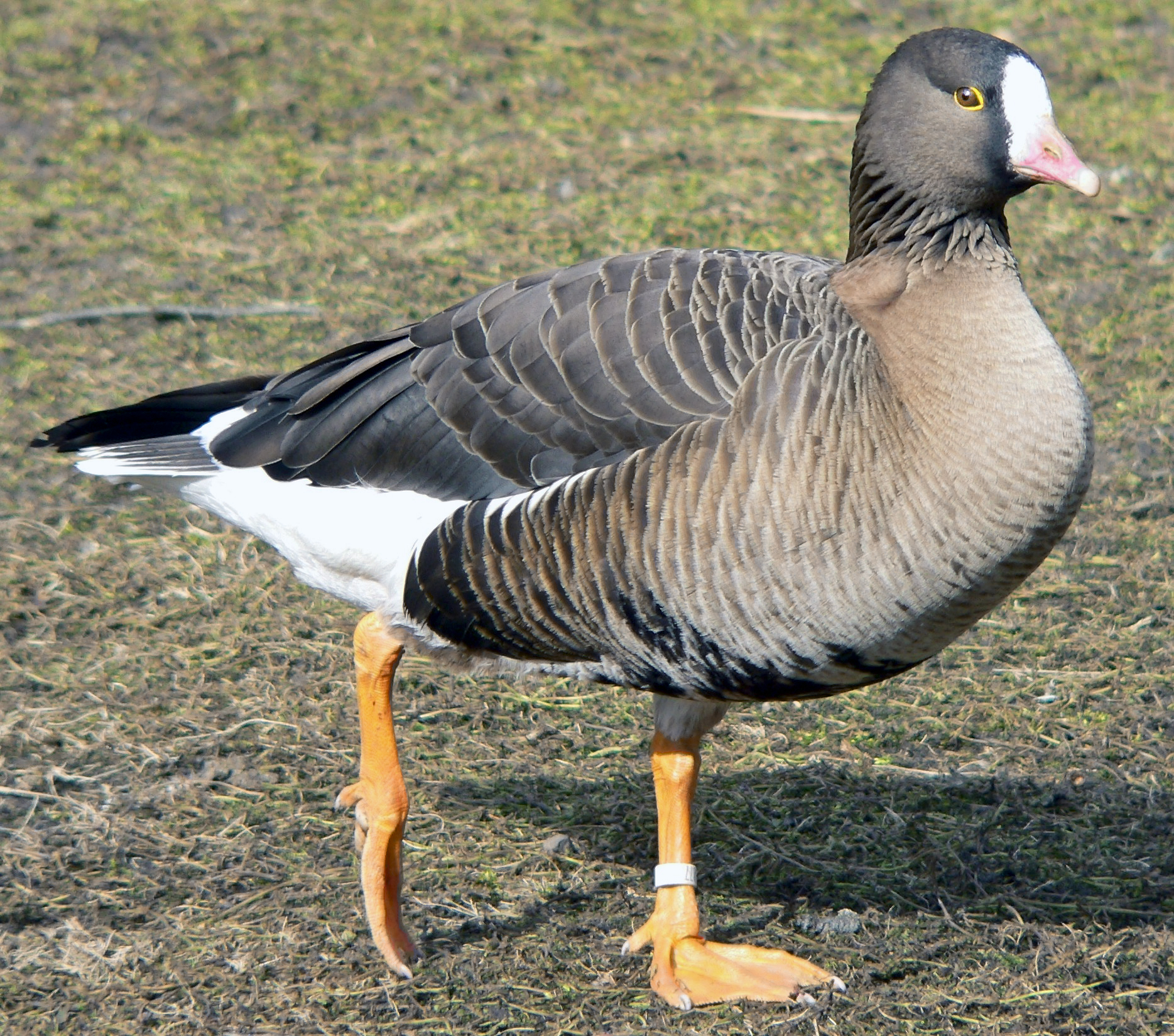
White-Fronted Geese are classified into two subspecies: Greater White-Fronted Geese (Anser albifrons) and Lesser White-Fronted Geese (Anser erythropus). Both species inhabit Japan, with the Greater White-Fronted Goose being more common.(8)
Greater White-Fronted Goose
The Greater White-Fronted Goose is a medium-sized, heavy-bodied bird with stocky legs, a small bill, and a short neck.(9) These birds average about 25.2-31.9 in (64-81 cm) in length and can have a wingspan of about 53.1 in (135 cm). The adult birds are “mostly brown with white feathering around the base of a pinkish-orange bill. Black barring marks the belly and the under tail is white.”(9) While the birds are flying, an observer can see a white “U” at the base of the tail. When the birds are standing still, a thin white line across their side is noticeable.

Lesser White-Fronted Goose
The Lesser White-Fronted Goose is similar to the Greater White-Fronted Goose but smaller and more compact. This goose averages about 21–26 in (53–66 cm) in length with a wingspan of about 47–53 in (120–135 cm).(10) This goose is also described as having “a rather oval, ‘high-crowned’ head with a steep forehead . . . and relatively long wings which project well beyond the tail-tip.”(8) These geese may also move more rapidly than the larger birds. This behavior can also help determine the difference between the Greater and Lesser species.(8)
Haiku, Kigo, and Saijiki
The kigo, or season word, is one of the key parts of the haiku. A kigo “a poetic device used in haiku to denote a season.”(11) It can “conjure up many allusions, historical references, spiritual meanings, and/or cultural traditions.”(11) When used in a haiku, it is “especially effective because of this power to expand its meaning beyond the literal and to create a larger aura of seasonal mood, historical/ literary context, and/or cultural implications.”(11)
A saijiki is a dictionary of season words, or kigo, paired with haiku using that season word. A saijiki is a reference and tool for the poet that is divided into five seasons (Spring, Summer, Autumn, Winter, and New Year) and separated into seven categories.
In The Five Hundred Essential Japanese Season Words selected by Kenkichi Yamamoto, each of the five seasons has seven categories of words.
- Seasons
- Heavens
- Earth
- Humanity
- Observances
- Animals
- Plants
While this document doesn’t include haiku for each season word, it is helpful in understanding what words may be kigo.
In A Dictionary of Haiku, Jane Reichhold’s English language saijiki representing her location and experiences, she follows the five seasons structure with some slight differences in categories. Reichhold’s categories are:
- Moods
- Occasions
- Celestial
- Terrestrial
- Livelihood
- Animals
- Plants
Both Reichhold’s Dictionary and Yamamoto’s Essential Season Words are helpful in understanding the role and use of kigo in haiku.
This Week’s Kigo and Haiku
In The Five Hundred Essential Japanese Season Words as selected by Kenkichi Yamamoto, “goose”, and “migrating birds” are relevant kigo for this week. These kigo are located in the Animals category of Yamamoto’s list.
In Jane Reichhold’s A Dictionary of Haiku, “cormorant”, “migrating fowl”, “pheasant”, and “ vulture” are relevant kigo. These kigo are listed in Animals category of Reichhold’s list.
Now, let’s read some haiku.
Basho
geese clamoring
on the rice fields at Toba-
frigid rain.
(translated by David Landis Barnhill)
cockscombs-
with geese arriving,
now deeper crimson.
(translated by David Landis Barnhill)
Issa
geese honking--
in this year of suffering
just one harvest moon
(translated by David G. Lanoue)
just today and tomorrow
left of autumn!
rice field geese
(translated by David G. Lanoue)
a crow pays
the wild geese a visit...
rice field
(translated by David G. Lanoue)
Buson
The surprised mud snail
shuts its door —
a landing goose
(translated by Allan Persinger)
Returning geese
the moon reflected in every paddy
this cloud dappled night
(translated by Allan Persinger)
Reichhold
flight of a bird
unmarked
a feather falls
last light
out of the cove
a dark bird
Haiku Invitation
This week’s haiku invitation is to write a haiku or senryu about geese.
Share your haiku in the comments below, or post on your page and link back. I can’t wait to read what you write!
Formatting Note: To eliminate the spaces between the lines of your haiku, hit shift-enter at the end of the line. For example,
one (shift-enter)
line two (shift-enter)
the third line (shift-enter)
You can support this newsletter work by donating at “Buy Me a Coffee” or shopping at our bookstore.

Thank You!
A Local Saijiki Project
The Yuki Teikei Haiku Society, explains that a saijiki is useful for poets, “naturalists, and people interested in the natural and cultural history of an area.” The saijiki contains seasonal words, plus haiku that demonstrate the poetic qualities of the words.
The creation of a local saijiki, one that represents an individual community, always felt like a big, daunting, and yet worthwhile project. So, I have decided to try and create my own saijiki. I am not sure how this will turn out, but if you are interested in joining me and creating your own saijiki, I have created a saijiki worksheet to get you started. If nothing else, this is a good exercise in noticing the natural world and writing haiku. Let’s see where this project takes us!
About Today’s Haiku
Basho’s haiku were retrieved from “Matsuo Bashō’s haiku poems in romanized Japanese with English translations” Editor: Gábor Terebess. Issa’s haiku were retrieved from David G. Lanoue’s Haiku Guy. Buson’s haiku was retrieved from Foxfire: the Selected Poems of Yosa Buson, a Translation by Allan Persinger. Jane Reichhold’s haiku was retrieved from the Dictionary of Haiku.
References:
- “The 24 Solar Terms”; China Educational Tours
- “6 Solar Terms of Autumn”; China Educational Tours
- “The History and Healing Power of The Chrysanthemum”. The Qi.com
- “24 Solar Terms: 8 things you may not know about White Dew”. English.gov.cn
- 72 Seasons App
- “Japan’s 72 Microseasons”; Nippon.com
- Ishi Hiroyuki; “The Flight of the Wild Geese”: Nippon.com
- “Greater and Lesser White-fronted Geese photo ID guide”; Birdguides.com
- “Greater White-Fronted Goose”; AllAboutBirds.org
- “Lesser White-Fronted Goose”; Wikipedia
- New to Haiku: What is a Kigo?; Haiku Foundation
 SeasonWords.com

Hey Mark, another wonderful post. Only yesterday evening and this morning we experienced a little frost, nothing to worry us but surely a sign, mid October, of the changing season. I’ve no haiku, at this time but I hope you don’t mind me adding a Mary Oliver poem which I particularly love:
You do not have to be good.
You do not have to walk on your knees
for a hundred miles through the desert repenting.
You only have to let the soft animal of your body
love what it loves.
Tell me about despair, yours, and I will tell you mine.
Meanwhile the world goes on.
Meanwhile the sun and the clear pebbles of the rain
are moving across the landscapes,
over the prairies and the deep trees,
the mountains and the rivers.
Meanwhile the wild geese, high in the clean blue air,
are heading home again.
Whoever you are, no matter how lonely,
the world offers itself to your imagination,
calls to you like the wild geese, harsh and exciting –
over and over announcing your place
in the family of things.
I love Mary Oliver! Thanks for sharing!
Adele, you’re welcome. I’ve loved Mo’s poetry for….years! 🤗🙋♂️
Wonderful Mary Oliver poem. In fact, I used it a week or two ago in the contemplative spirituality glass I lead at church. We read a lot of Mary Oliver poetry! Peace, LaMon
Hi LaMon, Mary Oliver is a favourite of mine. In fact this poem, Wild Geese, was a starting point for much ‘soul searching’. Have you read “Sleeping in the Forest”? It is a more ‘beautiful’ poem, if I can use that word in these days of realism! Good to hear from you. 🙋♂️
https://www.poetseers.org/contemporary-poets/mary-oliver/mary-oliver-poems/sleeping-in-the-forest/
WOW! I don’t think I have ever read that poem. (But my memory, at 76, is not great!) I may us it in the class, though my more literal members may rebel 🙂 Peace, LaMon
Good luck with that one! 🙏
Ashley I am so delighted you decided to post Mary Oliver’s poem! 🙂
Hi Maddy, I’m a real Mary Oliver fan. I’ve some 16 books of her poems which I adore. I should have written to her whilst she was still with us. Perhaps, I can still reach out to her spirit & write my own poem in her honour.
Thank you for making your comment here in Mark’s blog. 🤗🌹🙏
Wonderful, Ashley. I am looking forward to reading more of her poetry. I already read “The Summer Day” last night. 🙂
Maddy, check out “Sleeping in the Forest”. It is a beautiful poem!
Ashley,
Thanks for sharing this poem. Lovely.
Thank you for sharing Mary Oliver’s beautiful poem. I love the powerful inspiration in the lines:
“…Meanwhile the wild geese, high in the clean blue air,
are heading home again.
Whoever you are, no matter how lonely,
the world offers itself to your imagination,…”
Thanks, Suzette. She is a wonderful writer. 🙋♂️
It was a lovely share Ashley. Really enjoyed the reading Mary Oliver’s poem. Thanks again.
Wow! I am just awed by this poem! Thank you Ashley
A special poet. One of America’s best (born in Maple Heights, Ohio).
🙂
Hi Ashley, Thanks so much for sharing this! I also really appreciate Mary Oliver’s poetry. It’s a wonderful addition to this weeks conversation!
My pleasure, the geese….what can I say….and Mary Oliver’s poem is superb. 🙋♂️
Hi Mark! I look forward to your blog every Friday! Here is my Canadian contribution, lol!
Canadian geese.
They’re protective of their kids.
Try hard to love them.
Adele, I am charmed by your haiku…your resolve to love them touches my heart and makes me smile! I got inspired to find out more about them 🙂
Thank you, Maddy! You are always so sweet!
Adele
Your welcome, Adele. 🙂
Hi Maddy! How are you? What happened to Mark’s blog?
Hi Adele,
I am doing well, thanks. I hope that you are too. 🙂 I am not sure what happened…I wonder if Mark just got so busy, it became difficult to post every week. It’s good that he left the blog open for us to continue exploring Season Words and refresh our memory. It’s lovely to hear from you. 😊
Nice humor in this haiku, Adele. I (and others) have come to a complete stop, waiting for Canada geese parents march their goslings single file across the road. They are protective of their kids.
Thank you, Nan. Yes, me too!
Adele
Thank you Adele. The Canada geese honking is truly the bird song I know well.
Thank you, Suzette, for your nice comment. Yes, it is the sound of fall.
Adele
Hi Suzette! How are you? Do you know what happened to Mark’s blog?
Hi Adele, I was thinking about that question just recently. No, I do not know, I’m sorry.
No problem!
Have a great weekend Adele. Cheers.
You too, Suzette! I’m looking forward to reading your blog!
Oh you are most kind Adele. Blessings to you!
Thank you! To you too!
Thank you!
Hi Adele, This one is so true! I have been chased by one or two geese in my life!
Thank you, Mark! Yes, they are known for that!
Adele
Hi Adele, Suzette and all…Hope everyone is well. Nan posted information on “Chrysanthemum’s Bloom”, “Week 42” (near the end of the post,) regarding questions and concerns.
Thank you. I hadn’t seen that.
You’re welcome, Adele…I just recently saw Nan’s post.
Hope you are having a good day, Adele!☺️
Yes, thank you! How about you?
Thanks, Adele…I am. ☺️It’s somewhat cold outside today but the sun is shining through and there’s a lot of spring activity… Watching the butterflies through the window outside flitting back and forth!
So nice! Where do you live?
Thanks, Adele, 😊 Hope you are having a lovely weekend…I live in Northern California, Solano County in the hills. We love it here. This area is where we raised our children:)
Yes, we had a nice weekend, thank you. I hope you did too. I think where I live in Wallaceburg, Ontario, is almost the same latitude as you!
Thanks Adele. I had a nice weekend, too…it’s very interesting that they are both almost the same latitude. 😊 Wallaceburg looks beautiful.
Hope you have a great day:)
Yes! Thank you!
😊
Once again I thoroughly enjoyed your enlightening post, Mark, and the seasonal beauty you offer. We live in No. Calif. and the skies above my house have been animated with the V formations and wonderful squawking of the Canada geese arriving for the winter. In a month or two we should have rain that fills the rice fields of the Sacramento River Valley, and then the white-fronted geese arrive from the northern climes for the winter, just like they experience in Japan. Thanks so much for the elegant poetry and narrative celebrating this season.
Jet, I am so inspired by your beautiful description of Canadian geese arriving in Northern California for winter! It’s helping me to see them in a different light!
Hi, Jet. It’s nice to hear about the safe arrival of the Canada Geese in your area. I am in Canada (Northwest Alberta) and I didn’t know that Sacramento had rice fields. Thank you for the great information and comment.
Hi Jet, Thanks so much for the kind words and for adding your experiences around bird migration to the conversation! Thanks again!
Have not seen geese here of late, though am only recently come to this higher hill country zone just above the coffee line around 5,500 feet in ancient Olmeca country. But the season changed abruptly two days ago, and with it have noticed some new bird families as quasi-haiku’d below…
===============================================
sudden steep drop in overnight lows
rainy season ending…
that delicious wood smoke smell again!
hawks circling as ever
above our modest valley below
framed in our whole wall wide mountain view windows
a new family has come
who swoop and dart like swallows
you are most welcome!
the yellow-breasted clan is back
sporting black-and-white striped heads
old friends, we know each other well
though last we met in Jalisco…
Baron, all four of these haiku are wonderful! I really like your first as it brings to mind fall with all its changes in weather. The last poem, “a new family has come” resonates for me too.
Baron,
You must have a vibrant (migratory) bird population to enjoy based on your haiku above. It was fun to read them all. ~Nan
Lovely haikus Baron! I enjoyed your perspective dips of highs and lows in the first three poems. And the call to home of the last one is beautiful and heartwarming “old friends, we know each other well..” Well done!
Hi Baron, What a great collection of haiku for this week with wonderful imagery! Very nice!
Mark, I was attracted to several of selected haiku, but Reichhold’s “last light” simple haiku was me favorite. Here is a haiku I wrote last year (?). I had marked it to send into Frogpond. If I did, it wasn’t selected. But whatever, I still like it!
geese are flying south
thinking ahead
stacking up firewood
Peace,
LaMon
LaMon, I am enjoying your poem with the “geese are flying south…” and “…stacking up firewood…” . It conjures up a sense of the slower and more peaceful pace of autumn.
Thanks Maddy. Also your phrase “peaceful pace of autumn” would make a nice second line in a haiku! Peace, LaMon
Hi LaMon, I agree that “peaceful pace of autumn” is a great line. Perhaps line 3?
My main hesitation would the 6 syllables. Swapping fall for autumn would make it 5. I am not committed to 5-7-5 by any stretch, but for some strange reason, don’t like to exceed those numbers in the respective positions. But you are correct that the image might work best in that last line. Peace, LaMon
Well, thank you, LaMon!
Peace to you as well.
Hi Mark and LaMonn…I really appreciate the feedback. (Mark, I used the kigo at the top of this week’s post:)
returning
to a peaceful pace
wild geese
~ ~ ~
return
of wild geese
a peaceful pace
Having kigo in a different line, makes the two quite different. 🙂
Hope everyone is having a great week! 🙂
Editing
This version… I switched Line 1 with Line 2
wild geese
returning
a peaceful pace
One of the reasons I love haiku so much…all the different versions.
LaMon,
Whether or not the editors of Frogpond liked it, I certainly do. It brings the fall season to mind without ever directly saying it. Well done. If it is any consolation, I’ve never had any haiku selected by Frogpond, and I’ve given up trying. ~Nan
Thanks for the encouragement Nan. I may keep my membership for another year, but possibly not. I have not even read through all of the last issue; and I used to read it religiously. But now I find myself comparing what I sent in with some that were accepted and the feelings engendered are not conducive to the peace I keep harping on 🙂 Peace, LaMon
I must admit that I haven’t been a member for a number of years. I was told not to submit again by one of the (now previous) editors until I could write haiku, and after that, I didn’t re-up my membership.
Until then, I read each issue religiously and wondered what I was doing wrong compared to others that were published. I wish you peace, LaMon.
Amazing haiku LaMon, you packed two vistas into your well chosen words..preparation for the winter abounds in geese flying south and and one’s thoughts taking ‘flight” to prepare for winter’s cold as well. Brilliant!
Thank Suzette!
Good Afternoon Mark,
Lovely post. I’ve put one here, a second on my blog at the link; Birding…
https://julesinflashyfiction.wordpress.com/2024/10/11/nd-10-11-xxiv-issho-ni-kaita-retrans/
gander, goose
goslings gather – go
fairy tails
Mother Goose is read at nap-time, the curls of her crown fall gently down.
© JP/dh (Jules)
Jules, your first haiku delights with your alliteration of g’s and last line of “fairy tails.” I am also entranced with your monaku. “…the curls of her crown fall gently down…” so very lovely.
Thanks Maddy – I write them in pairs so they can connect with each other. I used to read to my grand-daughter who had curly locks… so peaceful when sleeping 😉
This is great, Jules…writing in pairs. I thought it might be that…she sounds like an angel! 🙂
Jules, this haiku is just delightful as is the American Sentence you’ve included with it. I’ll check out your post for the other haiku.
~Thanks
Hi Jules, “Mother Goose” is really well done! I looking forward to reading the second set of poems in a minute.
~Thanks.
Hi Mark,
Wonderful post…I enjoyed learning about the two types of white fronted geese. I believe it’s the greater white fronted geese (I looked it up!:) who come to the marsh where we used to live.
canadian goose
unwanted house guest
at my neighbor’s door
My neighbor was an animal lover and got the right kind of help for him.
~ ~ ~
cold dew
watering the succulents
out of habit
I got so used to watering these plants every day… twice a day sometimes during the heatwave we’ve been experiencing recently.
~ ~ ~
I enjoyed reading about chrysanthemum liquor. I did have a cup or two of chrysanthemum tea when I was younger.
looking forward
to the chrysanthemums
hot cup of tea
the different colors of chrysanthemums in the stores this time of year…
All Issa’s poems are intriguing this week… his “geese honking…” pulled at my heartstrings.
I will be back to reread everyones’ poems. 🙂
Thank you Mark, after reading and studying your post, I am becoming more aware of the changing scenery, new scents and most eager to look for birds crossing the sky on our walks, in this new season coming upon us.
Hi Maddy, Thanks so much for this comment. It means a lot!
Your welcome, Mark. 🙂
Madeleine, such a variety of haiku, and all well done. I particularly liked the cold dew haiku although the mums are beautiful this time of the year. ~Nan
Thank you Nan. That is very lovely of you to say. Yes…they are most beautiful this time of year. 🙂
Maddy, your poems are rich with imagery. I love the feeling of comfort in them, from sips of tea to house guests.
Thank you for the lovely explanations of the related events that brought the poem to life. I love the idea of Canada geese as an unexpected visitor… LOL. Glad the neighbor took good care of the feathered guest accommodations.
Thank you for your delightful comments Suzette…lol, our neighbor did see the humor in it too, once the goose was in safe hands. 🙂
Awesome… Have a blessed rest of the day, Maddy.
Hi, Suzette and Adele…Nan posted information on “Crysanthemum’s Bloom”, “Week 42” regarding the questions we have concerning Mark.
Best,
Madeleine
Thank you, Maddy! I appreciate you letting us know. Many thanks to Nan for the update. Blessings to you!
You’re welcome, dear Suzette. Hope you are having a lovely Sunday.
I am indeed Maddy. And I trust that your Sunday is well?
Yes, Suzette, thank you. 🙂
Most excellent, Maddy. Blessings to you.
Blessings to you Suzette…I hope you have a great day. ☺️
Hi Suzette,
Season Words is up and running again… “Spring Haiku”, with prompts, and poems of the masters…hope you will join us soon,
Best,
Madeleine
Oh great news Maddy!!.Thank you. I will see what I can share soon.
I appreciate your sending this message. Happy Sunday. Blessings to you.
Sounds great, Suzette… 😊 Happy Sunday Blessings, to you too!
Thanks Madeleine. Cheers.
😊
Cheers to you, too, Suzette:)
Hi Maddy, What a wonderful collection of haiku for this week! I am especially drawn to “looking forward”. Hold on to that haiku because it will come in handy next week!
Hi Mark:
Thank you very much for your feedback. I always find it most helpful and that I am on the right track…I have an idea of what that might be! 🙂 Lol!
Mark, I just read Nan’s comment in the post.…I am very sorry to hear about your loss. I hope you and your family are all doing alright.
Maddy,
We have migrating Canada Geese. But we used to have some gray geese that a local farmette used to feed. They always left a mess in my yard – so I got in the habbit of when I saw them to shoo them away. One time they actually made it to the front yard and left a big mess on our driveway!
I understand, Jules…the little guy was creating quite a mess for my neighbor too. 🙂
You offer much to think about in your posts, Mark.
Hi Mary, Thank you so much for your comment. I am glad that you are enjoying the posts.
Hi Mark, Thank you for your wonderful information. As always you provide something knew for me to research. I have not heard of Chrsysanthenum liquer. So interesting to have spent some time researching that topic, Thank you for the introduction,
I like the poems this week. All are precious moments. I like the sober message in Issa’s
geese honking–
in this year of suffering
just one harvest moon
Have a great weekend Mark. Blessings!
Hi Suzette, I really like Issa’s haiku, “geese honking”. It resonates for me.
Yes, with me also Maddy! A familiar and favorite bird sound heralding their arrivals and departures. Many blessings to you this day! Peace to you. Thank you for your generous support, Maddy!
Hi Suzette, Thanks for the kind words! Issa’s way of looking at the world seems to produce some thought-provoking haiku.
A very inspiring haiku, Suzette! 🙂
Thank you Maddy! Cheers,.
🙂
Awww, lovely to hear Suzette…Many blessings to you this day and Peace to you as well!
Thank you Maddy!
Your welcome, Suzette. 🙂
Your blog site is lovely! And I really liked your haiku. Peace, LaMon
Thank you LaMon. I appreciate your wonderful comment and visit. Peace to you as well.
Hi Suzette, What a great image you created! I really like “sandstone sunset”. Wonderful!
Thank you Mark! Have a lovely week. Blessings to you!
Another informative post, Mark. Here in Ohio, on the coast of Lake Erie, I don’t know if the Canada geese are coming or going or actually never leaving. I’ve seen geese filling up the newly reaped fields. Now, for haiku:
Canada geese return
to our lake
–autumn afternoon
~Nancy Brady, 2024
Canada geese form
a V-shaped wedge
–fall flyway
~Nancy Brady, 2024
#offthecuff haiku
https://nbsmithblog.wordpress.com
As usual Nan, your off the cuff haiku is clear and clever. “fall flyway” is brilliant. I have never seen the word “flyway” but my spell check seems to say it is legitimate. But if it wasn’t, I would still like it! Peace, LaMon
Thanks, LaMon, for the compliment on my haiku. Flyway is a commonly used term around here because I live near a huge warbler migratory flyway. People come from all over to visit Magee Marsh each spring to see them all. ~Nan
Nan,
Your haikus are amazing. Your words choices are careful and full of meaning…”fall flyway” brings to mind much about autumn changes as well as the birds wintering elsewhere. Well done!
Thanks, Suzette. I hadn’t considered that aspect (fall flyway) at all, but I guess it does work. I was thinking of alliteration. I guess that is the power of haiku…a few words that can be interpreted in different ways.
So inspirational and picturesque Nan…they have a calming effect…”Canada geese for a V-shaped wedge..” resonates for me.
Hi Nan, Those geese could be coming, going, or staying put for the winter. I read somewhere recently that many goose populations have given up migration because of the benefits they have found living around humans. Wonderful pair of poems for this week! I especially like the image created by the first one.
Nan – We have Canada Geese – I think some may even stay depending on the temps. But I haven’t seen any at all in about a week. We used to have all gray geese. They used to be fed by a local farmette family – Those gray geese were nasty and dirty – so I took to shooing them when they came into my yard!
Jules,
Some of our Canada geese stay here all year round, but most go a bit further south when it gets cold. They start practicing getting into a V-shape about this time of year, some times forming up into great wedges.
Some of the smaller ones are actually Cackling geese, but I can’t tell the difference so, to me, they are all Canada geese. I often wonder if they are undocumented aliens. 😉
The three major geese round these parts are Canada Geese, Snow geese and actually greylag geese – who knew? Now I do.
Hi Nan, I wanted to congratulate you and Eavonka on yours and her surrealism haiku, published in last week’s THF’s “Haiku Dialogue”. I enjoyed reading them…They are both great.
Thanks, Madeleine. So kind of you to say. I wasn’t sure how surreal it was, but apparently it worked.
Pretty surreal, Nan! 🙂 … It did!
https://benjamintonkin.wordpress.com/2024/10/13/13-10-24-haiku/
A very creative haiku, Ben.
Hi Ben, I agree with Maddy, a very clever haiku!
Very informative.