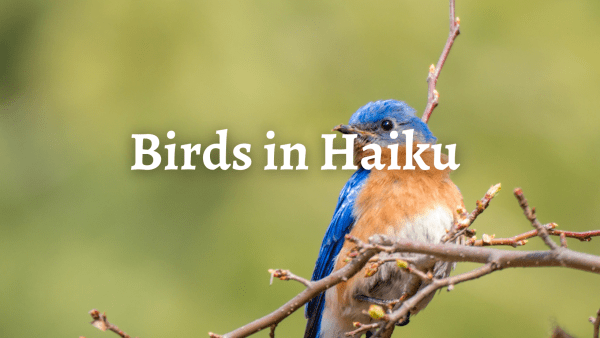
In June, the Northern Hemisphere transitions from spring to summer, marked by blossoming nature and specific seasonal observations. Birds play a key role in haiku, often serving as seasonal indicators or kigo, enriching the poetic experience.
Week 36: “End of Heat”
September 02 - September 08 is the 36th week of 2024. This week we enter into the meteorological season of fall, which runs from September to November, and remain in astronomical summer until the autumnal equinox on Sept 22, 2024. During this week we also wrap up the Solar Term of End of Heat (Aug 23 - Sept 07) and enter the micro-season of “Rice Ripens” (Sep 02- Sep 07). Basho, Issa, Buson, and Reichhold wrote the poems selected for this week.
Week 30: “Major Heat”
July 22 - July 28 is the 30th week of 2024. This week, we complete the Solar Term of Major Heat (July 22 - Aug 06), and we are in the micro-season of “Paulownia Trees Produce Seeds” (July 23 - July 28). Basho, Issa, Buson, Reichhold, and Kerouac wrote the poems selected for this week.
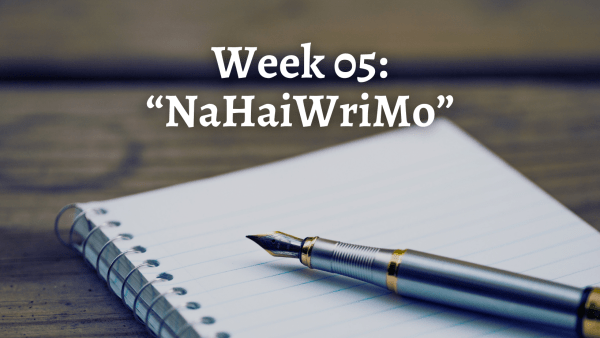
Week 05: “NaHaiWriMo”
January 29 - February 04 is the fifth week of 2024 in the Gregorian calendar. During this week, we complete the Solar Term of Major Cold (Jan 20 - Feb 04), and have the micro-seasons of “The Mountain Stream Freezes Over” (Jan 25 - Jan 29) and “The Chicken Lays Her First Eggs” (Jan 30 - Feb 04). This week also marks the beginning of National Haiku Writing Month. The haiku selected for this week are written by Basho, Issa, Buson, Shiki, Haritsu, Kerouac, and Kyoshi.
Micro-Season: “Earth and Sky Begin to Cool”
August 28 to September 01 is the micro-season of “Earth and Sky Begin to Cool”. This is the second micro-season of the season of Limit of Heat. To celebrate this season, we will learn about the conditions that contribute to the changing seasons, the festival of Nihyaku-toka, and then read haiku by Basho, Issa, and Buson.
Micro-Season: “Cold Wind Blows”
Aug 07 to Aug 11 is the micro-season “Cold Wind Blows”. This is the first micro-season of the season of First Autumn. To celebrate this season, we will learn about the O-Bon Festival and read haiku from Basho, Issa, Reichhold, and Kerouac.
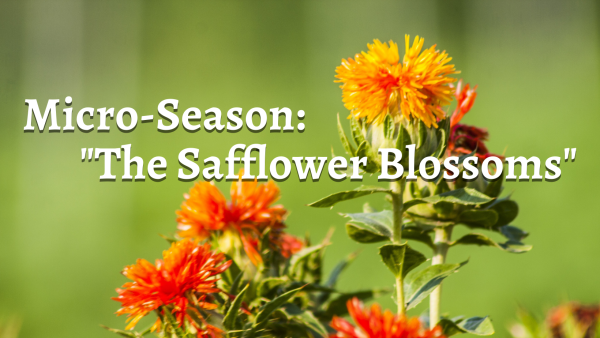
Micro-Season: “The Safflower Blossoms” (2023)
We have entered the micro-season of “The Safflower Blossoms.” To celebrate this season we will learn about the safflower and read haiku by Basho, Issa, Buson, Matsunaga Teitoku, and Yagi Shokyu-ni.
Micro-Season: “Light Rain Showers” (2022)
We have entered the micro-season of “Light Rain Showers”. This is the second micro-season of the mini-season of Frost Descent. As a way to celebrate this season, we will learn about rain, the different classifications of rainfall, and how the sound of rain can quiet a restless mind. After that, we will read seasonal haiku by Issa, Buson, and Basho.
A Sense of Awe: Reflecting on the poetry and work of Jacqueline Suskin
Jacqueline Siskin states that “Awe” lies at the heart of poetry. Awe allows us to see what matters in the world. It helps us find the joy, the sorrow, and the connections that can lead to individual and collective healing.
Haiku: The Sacred Art by Margaret D. McGee
“I didn’t know it, but I was having a 'haiku moment’- a moment when the mind stops and the heart moves”. This quote is from Margaret McGee, the author of Haiku: The Sacred Art (A Spiritual Practice in Three Lines), and it marks the beginning of her journey toward a haiku life.
Contemplating Charles Foster’s Essay “Against Nature Writing”
Charles Foster declares “I’m losing confidence in words” in the opening lines of his July, 2021 essay “Against Nature Writing”. In this article, I will explore Foster's argument and then propose that haiku could be the solution.
Some Prose About Poetry
Three resources that explore the challenges and benefits of reading and writing poetry,. These sources also offer insight into the ways we can learn and grow with poetry.